A Family Recipe, Written for a New Cook
A family recipe written for a new cook can carry a dish between kitchens, preserving its familiar cues while making room for clear, thoughtful variations.
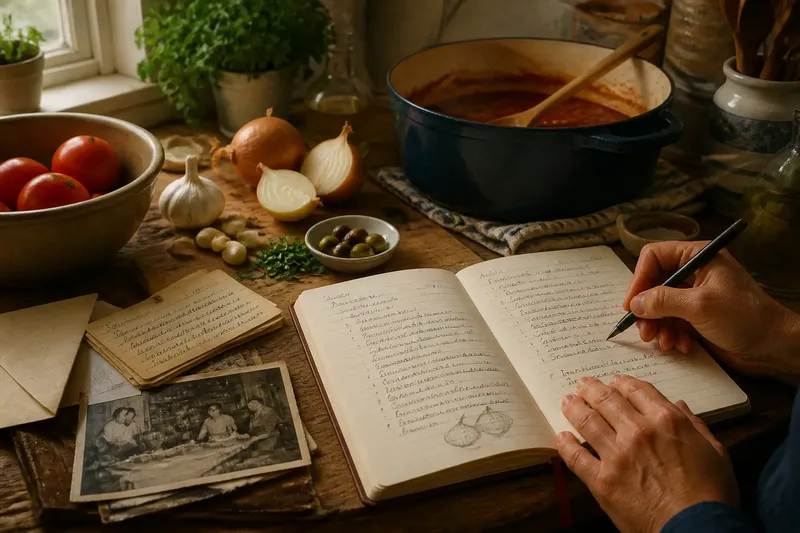
How can you write a family recipe so someone in another kitchen can cook it—and understand what makes it yours? A family recipe written for a new cook carries more than ingredients across places: it transmits gestures, sensory cues and household variations, while giving the next cook room to adapt them.
A recipe can travel through a handwritten card, a conversation or a message sent to a relative far away. Each time it moves, details may be lost or changed: a phrase that made sense beside the stove may confuse someone who has never watched the dish being made. Clear directions help preserve the method, while named variations show how the dish has gathered meaning in different kitchens.
A precise recipe makes the sequence easy to follow
This approach is useful when a dish depends on order, timing or several ingredients coming together. Write each action in the order it happens, and name the ingredient where the cook uses it. A new cook should not have to scan backwards to work out which bowl of chopped onion an instruction means.
Separate preparation from cooking. If the onions need slicing before a pan is heated, say so in the ingredient notes or in a short preparation line. Distinguish “stir until combined” from “cook until softened”: the first describes mixing, while the second describes a change in the food.
Precision does not mean pretending every kitchen behaves alike. A broad-based pan may heat differently from a small, heavy saucepan, and chopped vegetables can release different amounts of moisture. Give a time as an estimate when it helps with pacing, then add the visible or tactile sign that matters more.
Say you are writing down a lentil soup you usually make without thinking. You note that the onion goes in before the lentils, and that the garlic follows once the onion has turned translucent rather than browned. A relative cooking from the card in another country can follow the order and judge the onion itself, rather than guessing what “cook for a bit” means.
This format suits a relative who likes clear directions, or a dish unfamiliar enough to make improvisation stressful. Its limitation is that a tidy sequence can still omit the knowledge you use to correct the food as it cooks.
Sensory cues carry judgement between cooks
A sensory recipe describes what the cook sees, smells, hears or feels at important moments. “Fry until fragrant” becomes more useful if you add what to notice: the sharp raw smell of garlic softens, and a savoury aroma rises from the pan. These cues help a reader in a different kitchen judge progress even when their hob, pan or ingredients differ from yours.
Choose cues that are observable and specific. “The dough feels right” asks the reader to guess; “it feels soft and slightly tacky, but pulls away from a clean finger” offers a clearer comparison. If appearance can mislead, include a second sign, such as a change in texture or smell.
Not every action needs a sensory description. Focus on the points where you would pause, lower the heat, add liquid or decide that the food is ready. Those are the moments when unspoken judgement most affects the result—and the parts most easily lost when a recipe crosses from demonstration to written instructions.
This approach suits a dish that is forgiving but changes with the ingredients, such as a stew thickened by eye or a batter adjusted according to how it pours. It can also preserve a family member’s vocabulary. If they call a sauce “silky”, ask what that means in the pan: perhaps it coats the back of a spoon and has no visible streaks of oil.
Use familiar comparisons carefully. “The colour of tea” may mean different things to different readers, and sensory descriptions can be personal. Pair a comparison with a physical sign so the instruction remains useful even if the reader imagines another shade or texture.
A layered recipe records how a dish changes across households
Many familiar dishes do not have one settled form. One person adds lemon; another uses vinegar. Someone remembers a thicker sauce, while another prefers potatoes that remain firm. These differences are part of how a dish travels: each household may adapt it to taste, available ingredients or custom without erasing its shared starting point.
Keep the main method readable. Put optional changes in a clearly marked note beside the relevant step, not in a paragraph that interrupts the sequence. Explain what the change does: extra water makes the mixture looser, while a finishing squeeze of lemon gives it a sharper edge. That tells a new cook what is at stake without declaring one relative’s version more authentic.
Imagine you are recording a family tomato sauce for a cousin who has moved abroad. Your starting inputs are the shared base—tomatoes, onion and a slow simmer—and one variation your aunt makes: chopped olives stirred in near the end. You write the base method first, then note the olives beside the finishing step and describe their saltier, fuller flavour. The resulting recipe lets your cousin cook the shared version or choose the variation with a clear sense of how it changes the sauce.
This format suits a recipe that has travelled between kitchens or is regularly adapted. It can preserve the difference between a habitual adjustment and a defining feature. If a substitution changes the dish substantially, describe it as an alternative version rather than hiding it in the ingredient list.
What is not worth the effort is trying to settle every disagreement about whose memory is correct. Record the differences plainly and, where useful, name who makes each version. A recipe can preserve the relationship between versions without acting as a verdict.
Which recipe-writing choices help a dish travel?
How do I record a quantity I have always judged by eye?
Write a workable starting amount if you can, then describe the cue that tells the cook to stop or adjust. For example, note that flour is added gradually until the dough holds together without sticking heavily to the bowl.
Should I include cooking times?
Include an approximate time when it helps the cook organise the sequence, but pair it with a sign of readiness. The food’s colour, texture, smell or behaviour in the pan is often more useful than the clock alone.
How do I preserve a relative’s way of describing the dish?
Keep a distinctive phrase if it carries memory or character, then explain what the cook can observe. A family expression can travel beside a plain description rather than being replaced by it.
What if relatives disagree about the ingredients?
Record a shared base only if there is one, and place differences in separate variation notes. Identify each version by the person or occasion associated with it, without presenting one recollection as the only valid recipe.
Choose the form by asking what the next cook needs
Use a precise sequence when the reader needs to know what happens next. Add sensory cues where the result depends on judgement, and use variation notes when the dish belongs to more than one household version. These approaches can work together, but one should lead: too many side notes can make a simple method hard to follow.
Before sharing the recipe, read it as someone who has never watched you cook. Check that each ingredient appears before it is needed, each vague phrase has an observable meaning, and each optional change is clearly optional. If another cook can follow the page, invite them to mark where they hesitate; that often reveals the missing instruction.
A family recipe written for a new cook can carry a dish beyond the kitchen where it began. Preserve the cues that make it recognisable, name the variations honestly and leave the next cook enough clarity to decide what to keep and what to adapt.